In production facilities, warehouses, commercial centers, and hospitals, industrial cleaning equipment such as scrubber dryers, industrial vacuum cleaners, sweepers, and high-pressure washers operate continuously at high frequency.
Without proper maintenance, equipment easily encounters:
– Accelerated wear and tear
– Reduced cleaning performance
– Increased repair and replacement costs
– Unexpected downtime that disrupts operations
Applying the 5S–Kaizen methodology enables proactive and optimized maintenance, helping reduce 20–40% of breakdown-related costs and doubling the lifespan of equipment.
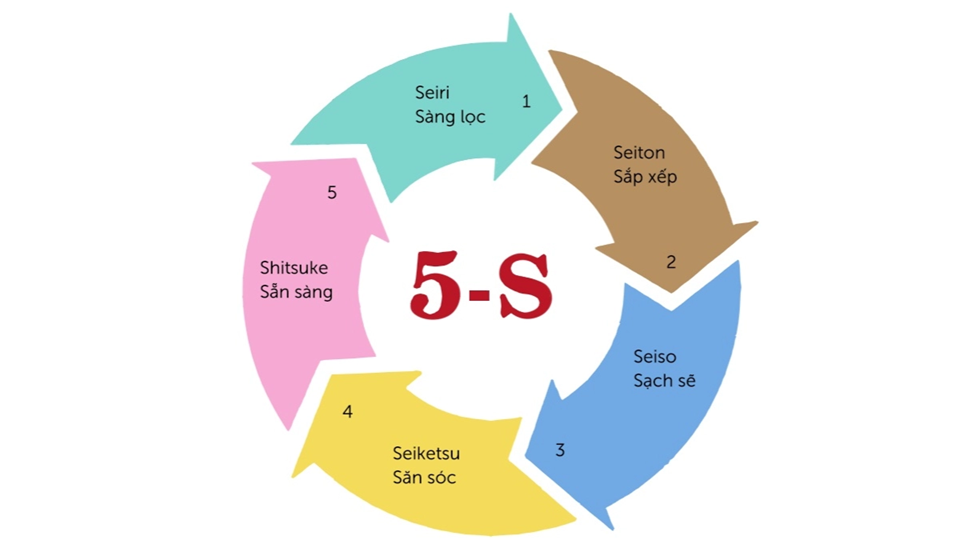
5S is not only an organizational method but also a standardized maintenance framework for cleaning equipment and machinery. Specifically:
1. S1 – Seiri (Sort)
Remove damaged parts, worn brushes, frayed cables
Eliminate tools not used for maintenance
Avoid mixing old and new components
Reduce risks of using incorrect accessories that may damage the machine.
2. S2 – Seiton (Set in Order)
Label all accessory storage: brushes, squeegees, batteries, suction nozzles
Assign fixed positions for each machine
Create weekly/monthly/quarterly maintenance checklists
Enable operators to work efficiently without time wasted searching for tools.
3. S3 – Seiso (Shine)
Clean the machine after every shift
Wipe motors, water tanks, and dust containers
For scrubber dryers: wash brushes and squeegee blades
For vacuums: clean filters and dust bins
Cleaning is the foundational maintenance step that helps detect early issues.
4. S4 – Seiketsu (Standardize)
Build maintenance procedures for each model
Keep a maintenance logbook
Attach QR codes linking to operation manuals
Ensure all staff follow a unified standard.
5. S5 – Shitsuke (Sustain)
Provide regular training for machine operators
Evaluate maintenance performance monthly
Reward or discipline based on clear KPIs
Turn maintenance habits into team culture.
Kaizen – Continuous Improvement in Machine Maintenance
Kaizen focuses on eliminating waste, increasing efficiency, and extending equipment lifespan.
Kaizen applications in maintaining industrial cleaning machines:
Condition-based Monitoring
– Install hour meters
– Track motor noise to detect bearing wear
– Measure suction performance to identify clogging or weak motors
Brushes, squeegee blades, filters, batteries
Define replacement cycles for each item
Reduce unexpected replacement costs
Optimize machine operation
Check battery/power status before each shift
Fill water tanks to proper levels to avoid motor overload
Avoid running scrubbers when the brush is jammed
Early Detection Technique
Detect early signs of failure:
– Worn belts
– Pump leakage
– Clogged suction hoses
– Abnormal motor noise
→ Reduces severe breakdowns by up to 70%.
Benefits of applying 5S–Kaizen to industrial cleaning equipment maintenance
| Benefit |
Improvement |
| Equipment lifespan |
+40–60% |
| Cleaning performance |
+20–30% |
| Reduction in major repair costs |
–30–50% |
| Reduced machine downtime |
–40% |
| Improved operational safety |
+50% |
These results are widely documented in Japanese manufacturing environments where 5S and Kaizen are fully implemented.
Recommended Standard Maintenance Procedures
Scrubber Dryer
Clean recovery tank after each shift
Wash brush & squeegee
Check battery/power system
Inspect for water leakage
Replace squeegee blades after 3–6 months depending on usage
Industrial Vacuum Cleaner
Dust off filters daily
Replace HEPA filters when suction drops by 30%
Clean dust bin thoroughly
Check gaskets and hose connections
Clean main and side brushes
Inspect brush wear
Monitor suction power and filter condition
Blow out filters with compressed air regularly
Applying 5S–Kaizen not only reduces operating costs but also:
– Extends equipment lifespan
– Optimizes cleaning efficiency
– Minimizes downtime
– Enhances hygiene and operational consistency
– Empowers maintenance and cleaning teams
This methodology is essential for any factory, industrial park, hospital, commercial center, or service complex aiming for long-term performance and stability.