In business models such as hotels, resorts, hospitals, healthcare centers, and professional laundry service providers, an industrial laundry system is more than just an equipment investment. It is a critical part of daily operations that directly affects service quality, linen turnaround time, labor costs, utility consumption, and the lifespan of textiles.
However, many businesses focus only on machine prices or nominal capacity while overlooking key operational factors. As a result, the system may function, but it fails to deliver the expected efficiency and may even create additional costs over time.
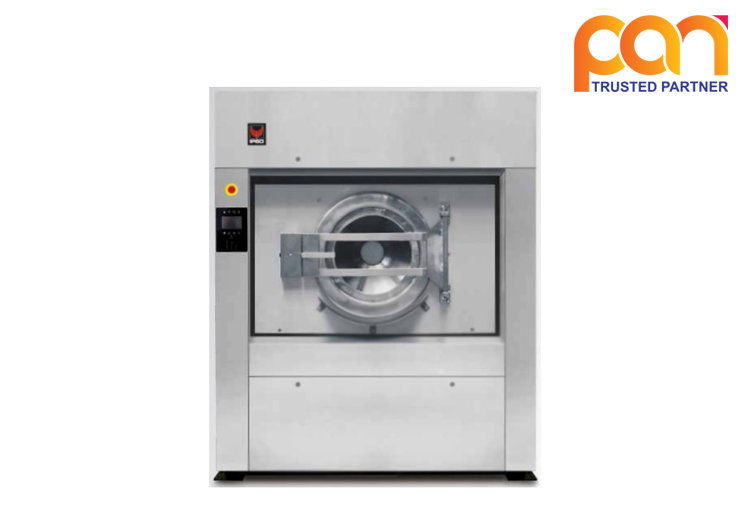
Below are six common mistakes businesses should avoid when investing in an industrial laundry system.
1. Choosing machine capacity based on assumptions instead of actual volume
This is one of the most common mistakes. Many businesses choose machines based on the idea of “buying bigger just to be safe” or “buying something that fits the budget first,” instead of carefully calculating their real daily laundry volume.
In practice, an effective laundry system should be designed based on:
- the volume of linen processed per day,
- the type of textiles being handled,
- the number of operating shifts,
- the required turnaround time,
- expected future growth.
If the selected capacity is too small, the laundry department can quickly become overloaded and delay linen delivery. If it is too large, the business may overspend on equipment and operate inefficiently.
2. Looking only at the purchase price and ignoring total operating cost
A cheaper system does not always mean a more cost-effective system in the long run. Many businesses compare only the initial equipment quotation without fully evaluating:
- electricity consumption,
- water usage,
- chemical consumption,
- maintenance costs,
- component durability,
- downtime risks in case of equipment failure.
In the industrial laundry sector, investment efficiency should be assessed through the total cost of ownership, not just the purchase price. A stable system that saves resources and is easy to maintain often provides much greater value over its lifecycle.
3. Designing an unsuitable layout for operational flow
Some businesses invest in high-quality machines but arrange their laundry area inefficiently, leading to workflow overlap, unnecessary staff movement, and weak hygiene control.
For example, if the soiled linen intake area, washing area, drying area, ironing area, and folding area are not arranged in a logical workflow, businesses may face problems such as:
- longer processing times,
- bottlenecks at individual stages,
- unnecessary handling steps,
- poor separation between clean and dirty linen,
- lower overall system productivity.
For hospitals and healthcare facilities, layout design and workflow management are even more important because they are directly linked to hygiene standards and infection control requirements.
4. Failing to match the system to the specific business model
Hotels, resorts, hospitals, food factories, and outsourced laundry service providers all have very different requirements. Yet many businesses still apply the same investment mindset to every model.
For example:
- hotels focus heavily on linen turnaround speed, textile quality, and service consistency;
- hospitals place greater emphasis on hygiene, segregation processes, and the ability to process large volumes daily;
- commercial laundry service providers need to balance productivity, operating cost, and flexibility when serving multiple client types.
If businesses do not clearly define their operational model from the start, they are likely to select equipment or system configurations that are not truly suitable.
5. Investing in separate machines without system-wide synchronization
Some businesses buy equipment piece by piece over time without an overall system design. While this may solve short-term needs, it often creates long-term problems such as:
- imbalance between washer, dryer, and finishing capacities,
- bottlenecks in one stage of the process,
- difficulty expanding in the future,
- higher operating and management costs.
An effective industrial laundry system is not determined only by individual machines, but by the coordination of the entire process: washing, drying, finishing, sorting, and delivery. When the system is designed as one integrated operational chain, businesses can optimize both labor and processing time more effectively.
6. Underestimating after-sales service and technical support
This is an issue that many businesses only recognize after the system has already gone into operation. In hotels and hospitals, prolonged equipment downtime can directly affect service quality and daily operations.
For this reason, businesses should pay close attention to:
- pre-sales consulting capability,
- installation and operator training,
- technical response time,
- spare parts availability,
- preventive maintenance planning.
A reliable partner does not only supply equipment. It also supports the business throughout the entire lifecycle of the system.
Where should businesses begin?
The most effective approach is to start with the actual operational challenge, not with a machine catalog. Businesses should first assess:
- how many kilograms of linen are processed daily,
- how many shifts are required,
- what turnaround time is expected,
- what hygiene standards must be met,
- what budget and long-term goals are in place.
Only then should they configure the right system, instead of buying machines first and trying to force operations to adapt afterward.
Conclusion
Investing in an industrial laundry system is an important decision, especially for organizations that process large linen volumes and must maintain consistent service standards every day. To invest effectively, businesses need a broader perspective that goes beyond equipment price alone. Capacity, layout, system synchronization, operating cost, and after-sales support all play a critical role.
By avoiding these six common mistakes, businesses can build a more efficient, reliable, and future-ready laundry operation.
If your business is looking for the right industrial laundry solution for hotels, hospitals, or service facilities, getting proper consultation from the beginning can significantly reduce investment risk and improve long-term operational performance.
📍 PAN TRADING JOINT STOCK COMPANY
142 B2 Street, Sala Urban Area, An Khanh Ward, Ho Chi Minh City, Vietnam
📞 Tel: (+84) 28 3840 2222
🌐 Website: https://pantrading.vn
📩 Email: contact@pantrading.vn